

Cost of Master Key System: Complete 2026 Guide
Updated: Sep 16
Table of Contents
What Is a Master Key System and How It Works
Cost of Master Key System Installation
Typical Installation Cost Ranges
Itemized Cost Components
Cost Variations by System Complexity
Geographic and Market Factors
Rekeying vs. Replacing Master Key Systems
Benefits of Restricted Key Systems
Commercial Locksmith Service Pricing and Scope
Total Cost of Ownership Over 5-10 Years
Security Risks and Vulnerability Assessment
Frequently Asked Questions
Last Updated: September 1, 2026
What Is a Master Key System and How It Works
A master key system is a hierarchical access control method where one key (the master key) opens multiple locks, while individual change keys open only their designated locks. This structure creates multiple tiers of access, allowing facility managers to control who can enter specific areas while maintaining a single override key for emergencies or administrative access.
The system works through pin-tumbler lock mechanics. A standard lock contains five or six pins of varying heights (peer-reviewed research). In a master key system, each pin is split into two segments, creating additional shear lines. This design allows both the change key and the master key to align all pins at the correct shear line, but only the master key aligns the additional shear lines created by the split pins.
For example, a property manager might hold the grand master key that opens every unit in an apartment complex, while individual residents hold change keys that open only their own doors. Maintenance staff might carry a master key that opens common areas and utility rooms but not residential units. This tiered hierarchy provides flexibility without compromising security.
The cost of master key system implementation depends on the number of locks being keyed, the complexity of the access hierarchy, and whether you're retrofitting existing locks or installing new hardware. Understanding these factors helps property owners and facility managers budget appropriately for security upgrades.
Bay Safe and Lock provides comprehensive locksmith and security solutions to design and install master key systems tailored to specific access needs. Our team understands the balance between convenience and security that makes these systems valuable for multi-unit properties and commercial facilities.
Cost of Master Key System Installation
The cost of master key system installation varies significantly based on property size, existing hardware condition, and the complexity of your access hierarchy. However, understanding the typical cost breakdown helps property owners and facility managers budget accurately.
Typical Installation Cost Ranges
For a small residential property (5-10 locks), expect installation costs to vary. A mid-sized apartment complex (20-50 units) will also have varying costs, while large commercial facilities (100+ locks with multi-tier hierarchies) can be a significant investment.
These ranges assume professional locksmith labor. Labor typically accounts for a significant portion of the total installation cost, with materials making up the remainder.
Itemized Cost Components
Locksmith labor is a major expense. A typical installation involves:
Initial security assessment and system design
Lock rekeying or cylinder installation
Master key and change key cutting
System testing and documentation
Materials include:
Rekeying services (if using existing locks)
New lock cylinders (if replacement needed)
Master key blanks and change keys
Hardware modifications, strike plates, or reinforcement as needed
Restricted keyway blanks (if applicable)
System design and consultation may be charged separately by some locksmiths for a detailed access hierarchy plan, especially for complex multi-building or multi-tier systems.
Cost Variations by System Complexity
A simple two-tier system (one master key and individual change keys) costs considerably less than a four-tier system with grand master keys, master keys, sub-master keys, and change keys. Each additional tier requires more complex pin configurations and typically adds to material and labor costs.
Lock condition significantly affects pricing. High-quality pin-tumbler cylinders compatible with master key specifications can be rekeyed economically. Budget-grade locks or incompatible hardware require full cylinder replacement, which increases the per-lock cost. Worn or damaged locks may also require strike plate adjustment or door frame reinforcement.
The keyway you choose also affects pricing. Standard keyways are the least expensive option but offer no protection against unauthorized key copying. Restricted keyways, which use proprietary key blanks that only authorized locksmiths can duplicate, add to material costs and typically require a one-time fee to register your system with the manufacturer.
Geographic and Market Factors
Locksmith rates can vary by region. The complexity of your facility layout also matters; a building with numerous interior doors, multiple access zones, and restricted areas requires more detailed planning and installation time than a simple residential setup, potentially adding to labor costs.
Seasonal demand and locksmith availability can also influence pricing. Emergency or rush installation requests typically incur a surcharge. Scheduling installation during off-peak times (weekdays, non-holiday periods) often results in better pricing.
Rekeying vs. Replacing Master Key Systems
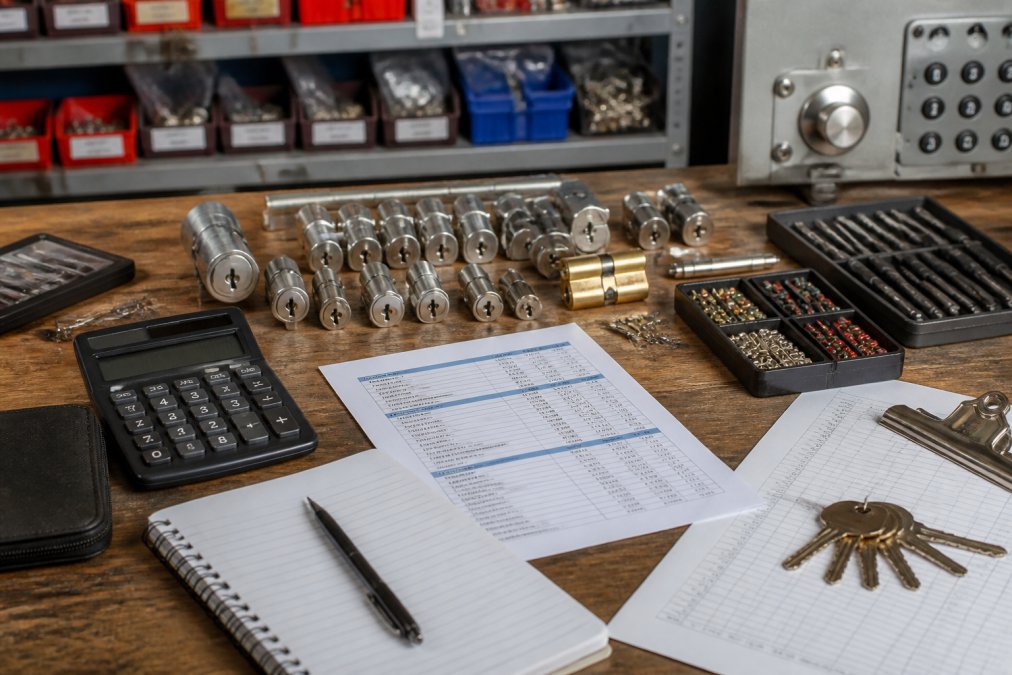
Rekeying involves removing the existing cylinder from a lock and altering the internal pin configuration to match your new master key system. Replacement means installing entirely new lock hardware. For most property owners, rekeying existing quality locks is the more economical choice when the locks are mechanically sound and compatible with master key specifications.
Rekeying preserves your existing door hardware, frames, and strike plates. If your locks are from reputable manufacturers and the cylinders are in good condition, rekeying them to work with a master key system makes financial sense. The locksmith removes the cylinder, reconfigures the pins to match your key code, and reinstalls it. This process typically takes a short amount of time per lock.
Replacement becomes necessary when locks are damaged, the wrong type for master key configuration, or when you want to upgrade to higher-security options like restricted keyways or anti-pick cylinders. Replacement involves removing the entire lock assembly and installing new hardware, which takes longer and costs more but provides the opportunity to upgrade your security infrastructure.

The decision between rekeying and replacement should account for the age and quality of your existing locks. Budget-grade locks may not be worth rekeying; investing in new hardware with modern security features often provides better long-term value. Bay Safe and Lock evaluates your existing hardware during a security assessment to recommend the most cost-effective approach for your situation.
Benefits of Restricted Key Systems
Restricted key systems prevent unauthorized duplication by using proprietary key blanks that standard key-cutting machines cannot reproduce. Only authorized locksmiths with access to the correct blank stock can duplicate these keys, dramatically reducing the risk of unauthorized copies circulating.
This security feature matters most in facilities where access control is critical, such as medical centers, government buildings, financial institutions, and secure storage facilities. If a restricted key is lost or stolen, you have assurance that someone cannot simply walk into a hardware store and create a copy. The restricted keyway creates a documented chain of custody for all keys in the system.
The trade-off is convenience and cost. Restricted key blanks cost more than standard blanks, and key duplication requires contacting an authorized locksmith rather than using a quick-copy service. For properties where security is paramount and the number of keys needed is manageable, this trade-off is worthwhile. For smaller residential properties with lower security requirements, the added expense may not justify the benefits.
Implementing restricted keyways requires planning during initial system design. You cannot easily retrofit a restricted keyway into an existing standard system without replacing all affected cylinders and hardware. This is another reason to work with an experienced locksmith during the planning phase. Bay Safe and Lock can help you determine whether restricted keyways make sense for your specific security needs and budget.
Commercial Locksmith Service Pricing and Scope
Professional locksmith services for master key systems typically include an initial security assessment, system design, installation, and follow-up key management support. The assessment phase involves evaluating your facility layout, identifying all access points, and understanding your security requirements. This consultation helps determine the appropriate tier complexity and hardware specifications.
Commercial locksmiths charge for labor, materials, and expertise. Labor rates vary by market and the technician's experience level, but expect to pay for the time spent on assessment, installation, and testing. Material costs include the cylinders, keys, hardware, and any specialized components your system requires.
Many commercial locksmith firms offer ongoing key management services, tracking key distribution, managing replacements, and conducting periodic security audits. These services add to the initial installation cost but provide valuable documentation and control over your access system. Facilities with high employee turnover or complex access requirements benefit significantly from professional key management support.
When evaluating locksmith quotes, ensure the proposal includes specific details: the number of locks, the tier structure, material specifications, labor hours, and any warranty or follow-up service. A comprehensive quote allows you to compare pricing fairly across providers and understand exactly what you're paying for.
Total Cost of Ownership Over 5-10 Years
The true cost of a master key system extends well beyond initial installation. Over a 5-10 year period, you'll incur costs for key replacement, lock maintenance, rekeying when staff changes require access modifications, and potential hardware repairs or upgrades.
Key replacement represents an ongoing expense. When employees leave, you may need to rekey affected locks to prevent unauthorized access with their old keys. In a large facility with significant turnover, these rekeying costs accumulate quickly. A master key system that allows you to rekey specific zones without affecting the entire facility reduces this expense compared to managing individual locks.
Lock maintenance and repair costs depend on usage and environmental factors. Commercial doors with heavy traffic experience more wear on cylinders and hardware than residential doors (nist.gov). Regular maintenance, lubricating cylinders, checking for wear, and replacing damaged components, extends the life of your system and prevents costly emergency lockouts.
Hardware upgrades may become necessary as security standards evolve or your facility's needs change. A well-designed master key system accommodates expansion; adding new locks to the system costs less than retrofitting an entirely new security infrastructure. This scalability is a significant advantage over ad-hoc security implementations.
When evaluating the cost of master key system options, calculate the total five-year cost including initial installation, estimated annual maintenance and key replacement, and any planned upgrades or expansions. This comprehensive view helps you choose a system that balances upfront investment with long-term operational costs.
Security Risks and Vulnerability Assessment
Master key systems introduce security vulnerabilities that don't exist with individual locks. If a master key is lost or stolen, every lock in the system is potentially compromised. This risk requires careful key management practices and immediate rekeying if a master key goes missing.
Lost change keys present a different concern. If a resident or employee loses their key, an unauthorized person could potentially find it and gain access. Many facilities require immediate rekeying of the affected lock when a key is reported missing, adding to operational costs but preventing security breaches.
The split-pin design that enables master key functionality creates additional shear lines that some security professionals argue make the locks more vulnerable to picking or bumping attacks compared to standard locks (nist.gov). High-security cylinders with anti-pick and anti-bump features mitigate this risk but increase hardware costs.
Key duplication represents a significant vulnerability in systems using standard keyways. Any employee or resident can take their key to a hardware store and have copies made without authorization. This is why restricted keyways exist, but they require ongoing discipline to prevent unauthorized duplication attempts. Even with restricted keyways, social engineering or theft of blank stock can compromise the system.
A professional security audit evaluates your specific vulnerabilities and recommends controls to minimize risk. This might include restricted keyways, limited key distribution, documented key tracking, periodic rekeying schedules, and access control upgrades. Bay Safe and Lock conducts security assessments that identify vulnerabilities in your current system and recommend cost-effective improvements.
The cost of master key system implementation depends on your facility size, access requirements, and security priorities. Initial installation costs vary widely, but the real investment lies in proper planning and professional installation that accounts for your long-term operational needs. A well-designed system reduces administrative overhead through simplified key management while maintaining security through access hierarchy and control.
NEED AN ESTIMATE FOR YOUR PROJECT? Bay Safe and Lock provides comprehensive security assessments and custom master key system design. Our licensed, fully insured team evaluates your facility, recommends the most cost-effective solution, and handles professional installation with ongoing key management support. Contact us for a detailed quote tailored to your property's specific requirements.
Frequently Asked Questions
Q: How much does a master key system cost to install?
A: The cost of master key system installation depends on the number of doors, lock hardware type, labor rates, and whether you're installing a new system or rekeying existing locks. Residential installations typically involve fewer access points than commercial properties, affecting total expense. For an accurate quote tailored to your property's specific needs, contact a licensed locksmith who can assess your access control requirements and provide a detailed estimate.
Q: What factors influence the price of a master key installation?
A: Key cost drivers include the number of doors and locks in your system, the complexity of your key hierarchy (whether you need grand master keys or multiple master levels), lock hardware quality and type, cylinder replacement versus rekeying labor, the use of restricted keyways to prevent unauthorized duplication, and your locksmith's service rates. Larger facilities with complex access control needs typically face higher installation costs than single-unit residential properties.
Q: Is it more expensive to rekey or replace a master key system?
A: Rekeying existing locks is generally less expensive than replacing the entire lock hardware. Rekeying involves changing the internal pin-tumbler configuration so existing locks work with new keys, preserving the hardware. Replacement means installing new lock cylinders and hardware throughout. However, if your current locks are damaged, incompatible with a master key hierarchy, or use non-restricted keyways, replacement may be the better long-term investment despite higher upfront costs.
Q: Do master key systems require ongoing maintenance costs?
A: Yes, master key systems require periodic maintenance and management. Costs include lock servicing, key replacement or duplication, security audits to prevent unauthorized key copying, cylinder cleaning and lubrication, and potential rekeying if keys are lost or staff turnover occurs. Restricted key systems add compliance oversight to ensure only authorized personnel can duplicate keys. Budgeting for annual maintenance prevents security vulnerabilities and extends the life of your hardware.
NEED AN ESTIMATE FOR YOUR PROJECT? CLICK HERE
This article was written using GrandRanker


Comments