

How to Open an Antique Restaurant Safe Without Damage
Updated: Sep 16
Table of Contents
How to Dial a Vintage Safe Lock: The Standard Sequence
Clockwise vs. Counter-Clockwise Rotation
Identifying the Number of Turns
Troubleshooting Stuck Dials and Common Issues
Non-Destructive Entry: What to Try Before Forcing the Safe
How to Identify Your Safe's Type
Matching Technique to Safe Type
The Records Search Angle
When to Call Antique Safe Locksmith Services
Mechanical Safe Lock Repair and Restoration Basics
Legal and Ethical Considerations for Safe Opening
The Abandoned Property Framework
Documentation You Need Before Calling a Locksmith
The Ethical Question of Contents
Working with Law Enforcement
Conclusion: Accessing Your Antique Restaurant Safe
Frequently Asked Questions
Last Updated: September 9, 2026
Finding an antique restaurant safe with a lost combination is common for new owners who inherit the hardware. Most vintage mechanical locks can be opened without drilling or destroying the safe if you understand the internal mechanism. This guide explains proper dialing procedures and non-destructive techniques before you call for professional help.
Opening an antique restaurant safe differs from cracking a modern electronic lock because the mechanism is purely mechanical and responds to a precise sequence of dial rotations. The internal wheel pack consists of wheels with notches that must align on a drive cam before the bolt work retracts. Before attempting entry, verify the safe is locked and the bolt work is fully engaged, as some vintage models have a separate locking bolt that can jam independently.
How to Dial a Vintage Safe Lock: The Standard Sequence
Dialing a vintage safe lock requires a strict sequence of rotations that aligns the internal wheels with the drive cam. The standard procedure is four full rotations left, three right, two left, and one right to the final number (sargentandgreenleaf.com). This "4-left, 3-right, 2-left, 1-right" pattern is the most common configuration, though some manufacturers used variations.
Each wheel in the pack must be "picked up" by a pin on the drive cam at a specific point during rotation. Four spins left engage all four wheels and align the first number; each subsequent rotation with fewer turns drops one wheel out of engagement, allowing you to set the remaining numbers.

Clockwise vs. Counter-Clockwise Rotation
Direction of rotation matters more than any other factor. Clockwise (right-hand) rotation engages the wheel pack by turning the drive cam to pick up the wheels. Counter-clockwise (left-hand) rotation drops wheels out of engagement to set subsequent numbers.
A common mistake is confusing which direction corresponds to which number. The first number requires the most rotations in one direction, and each subsequent number alternates direction with fewer rotations. If attempts fail, you may have the sequence reversed, so try starting with four rotations right instead of left, as some manufacturers built opposite-hand locks.
Identifying the Number of Turns
The number of turns depends on how many wheels are inside the lock, which corresponds to how many numbers are in the combination. A four-number combination typically requires four wheels, while a three-number combination uses three. Most antique restaurant safes from the early to mid-20th century use three or four number combinations.
You can identify the wheel count without opening the safe by observing resistance and sound as the dial rotates. Turning slowly, you will hear and feel a soft clicking as each wheel's gate passes the fence; counting these clicks during a full rotation reveals how many wheels are present. If the original combination fails, you may be using the wrong number of turns.
Troubleshooting Stuck Dials and Common Issues
A dial that will not turn freely is often the first sign your antique restaurant safe needs professional attention. Common causes include dried grease on the spindle, a bent drive cam, or debris in the mechanism. Forcing a stuck dial can bend the spindle or shear the drive pin, turning a simple issue into a costly repair.
Before assuming the lock is broken, check whether the bolt work is fully retracted. On some vintage safes, locking bolts can bind against the door frame if the safe has settled, creating tension that prevents the dial from turning. Gently lift the handle or apply light pressure to the door while turning the dial to relieve the binding.
Watch Out Never use penetrating oil or spray lubricants on a mechanical safe lock. These products attract dust and dirt, which will eventually gum up the wheel pack and cause more damage than the original problem. Proper safe maintenance uses only specific, non-gumming lubricants applied in precise locations by someone who understands the internal components.
Non-Destructive Entry: What to Try Before Forcing the Safe
Before attempting entry, the most valuable non-destructive step is identifying the type of safe you are dealing with. This determines which methods are viable. Most antique restaurant safes fall into two broad categories: fire safes and burglary safes.
Fire safes were designed to protect paper records from heat, not resist a determined thief. They typically have thinner steel walls and a simpler lock mechanism, often a basic three-wheel group lock with lighter bolt work. These are the most forgiving to work with.
Burglary safes feature heavier plate steel, often with hardplate protection over the lock, and more complex locking mechanisms. Some early 20th-century high-security models used dual-movement locks or time locks. Attempting dial manipulation on a burglary safe without experience is futile and risks damaging the dial spindle.
How to Identify Your Safe's Type
Look for a manufacturer's name and model number stamped on the door face, door jamb, or back of the safe. Common manufacturers include Mosler, Diebold, Herring-Hall-Marvin, and York. With the model number, you can often find original specification sheets in online archives or collector forums, which detail fire resistance, lock type, and original combination length.
If there is no visible model number, measure the door thickness. A fire safe typically has a door between 1 and 2 inches thick; a burglary safe's door will be 2 to 4 inches or more (ul.com). Also check the weight, a fire safe of a given exterior size will be significantly lighter than a burglary safe of the same dimensions.
Matching Technique to Safe Type
For a fire safe with a standard three-wheel group lock, the dialing procedure described earlier is your primary approach. If the combination is unknown, a skilled technician can often open these by manipulation in under an hour.
For a burglary safe, heavier bolt work and potential hardplate make manipulation more difficult. The non-destructive technique of choice is often optical manipulation: a locksmith inserts a borescope through the space between the door and frame to visually read wheel positions. This requires no drilling and preserves the safe's integrity, but it requires specialized equipment and a steady hand.
Watch Out Do not attempt to pry the door open on a burglary safe. The bolt work is designed to resist exactly this kind of attack, and you will likely bend the door frame, making the safe permanently inoperable and reducing its value to zero.
The Records Search Angle
Before calling anyone, do a thorough records search. Check the original purchase invoice, the building's insurance survey, or the previous owner's business ledger. Some managers kept a master key list or combination card in a separate office safe. The combination is often taped to the underside of the cash register drawer or written on the inside of the walk-in cooler door frame, the first places a professional will ask you to look.
If you find a combination but it does not work, do not assume it is wrong. The lock may have been re-combinated, or the numbers may be for a different safe on the premises. Try the sequence with a different starting point if the combination lacks clear direction indicators.
When to Call Antique Safe Locksmith Services
If basic dialing attempts and record searches fail, call professional antique safe locksmith services rather than risk damaging the safe. A qualified locksmith will first attempt non-destructive entry, and only with your permission will they consider drilling as a last resort. Drilling targets a specific point on the lock case, allowing direct manipulation through a small hole that can later be repaired.
Professional locksmiths bring experience with the specific manufacturer and model, which matters because vintage safes vary significantly in internal construction. The cost of professional opening is almost always lower than replacing a damaged safe or its contents. When selecting antique safe locksmith services, ask about experience with mechanical safe locks specifically, as modern electronic expertise does not always translate to vintage systems.
Mechanical Safe Lock Repair and Restoration Basics
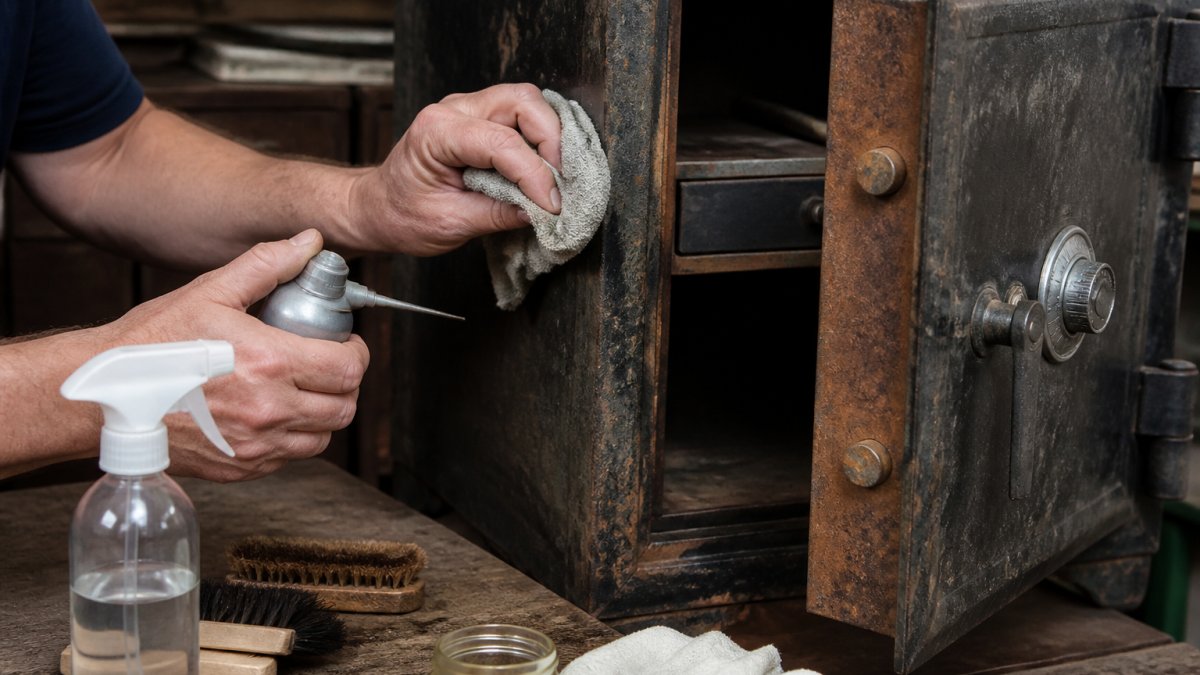
Once the safe is open, mechanical safe lock repair may be necessary to restore reliable working condition. The most common repair involves cleaning and re-lubricating the wheel pack and spindle, resolving most sticking and binding issues. A full restoration includes disassembling the lock, cleaning each component, replacing worn springs and drive pins, and reassembling with proper lubrication.
For safes used daily, consider having the lock serviced even if it is functioning, as preventative maintenance extends the mechanism's life significantly. The table below summarizes common issues and typical solutions:
Common Issue | Likely Cause | Recommended Fix |
Dial will not turn | Dried grease or debris | Professional cleaning and lubrication |
Dial turns but bolt won't retract | Misaligned wheel pack or worn fence | Internal lock adjustment or part replacement |
Combination no longer works | Worn drive cam or spindle | Replacement of worn internal components |
Dial feels loose or sloppy | Worn spindle bearings | Spindle and bearing replacement |
Legal and Ethical Considerations for Safe Opening
The legal landscape around opening a safe you did not own from day one is more concrete than most realize. The core issue is ownership of the contents, not just the safe itself. When you purchase a restaurant or building, the sale contract typically specifies what personal property is included. A safe bolted to the floor or built into the wall is often considered a fixture that transfers with the real estate, but its contents are a separate matter.
The Abandoned Property Framework
If the safe was left behind by a previous tenant or business owner, the contents are generally considered abandoned personal property. The legal framework varies by state, but a common standard requires making a reasonable effort to locate and notify the previous owner before claiming the contents. This typically involves sending written notice to the last known address and publishing a notice in a local newspaper for a specified period, often 30 to 60 days (ncsl.org).
If the previous owner is a dissolved business entity, the contents may belong to the state as unclaimed property. Each state has an unclaimed property division, usually under the State Treasurer's office. Before you open the safe and find cash or bearer bonds, understand that you may have a legal obligation to report it.
Documentation You Need Before Calling a Locksmith
A reputable locksmith will not open a safe without proof of ownership or authorization. Documentation they typically accept includes:
A deed or purchase agreement showing you own the property where the safe is located
A lease agreement if you are the tenant
A police report if the safe was involved in a break-in or you are a law enforcement officer
A notarized statement of ownership if the safe was a gift or inheritance
Key Takeaway Before you call a locksmith, assemble your documentation. Take a photo of the safe in its location, have a copy of your deed or lease ready, and if the safe came with a property purchase, have the closing statement available. This preparation will save you a wasted service call and establish your legitimacy from the start.
The Ethical Question of Contents
Even if you have a legal right to open the safe, consider the ethical dimension. If it belonged to a family-run restaurant that closed suddenly, the contents might include personal items, photographs, or records with sentimental value to the former owners. A professional approach is to open the safe, inventory the contents in the presence of a witness, and make a good-faith effort to return clearly personal items.
If you find cash or valuables, document the find and consult an attorney before spending it. The doctrine of "finders keepers" does not apply to property traceable to a prior owner. In some jurisdictions, failing to make a reasonable effort to return found property can result in criminal theft charges.
Working with Law Enforcement
If the safe is from a property involved in business closure, bankruptcy, or foreclosure, a court-appointed trustee or receiver may be involved. You must obtain authorization from the trustee before opening the safe. Attempting entry without authorization could be construed as tampering with evidence or interfering with a legal proceeding.
A professional locksmith specializing in antique safes will be familiar with these requirements and will often ask for a signed authorization form including a description of the safe, the property address, and your relationship to the property. This protects the locksmith against liability and you against a later claim of theft.
Conclusion: Accessing Your Antique Restaurant Safe
Accessing an antique restaurant safe requires a methodical approach that prioritizes non-destructive techniques, an understanding of mechanical lock mechanics, and a willingness to call in professionals when your own attempts fail. The dialing sequence, troubleshooting steps, and maintenance practices covered here will resolve many common issues, but some situations demand a trained locksmith. If you have an antique restaurant safe that needs opening, repair, or restoration, contact Bay Safe and Lock for an estimate.
Frequently Asked Questions
Can a locksmith open an antique restaurant safe without damaging it?
Yes. A qualified locksmith skilled in antique safe locksmith services uses non-destructive techniques like dial manipulation or scope drilling, which preserves the safe's value and function. They first attempt to decode the lock by feel and sound. Drilling is a last resort, done in a spot that allows for easy repair. This approach protects the antique safe's integrity and keeps restoration possible.
What is the standard dialing sequence for a vintage safe lock?
To dial a vintage safe lock, you must account for the wheel pack's drag. The standard procedure is to rotate the dial clockwise four times to reset, then stop on the first number. Next, turn counter-clockwise three times, passing the second number twice before landing on it. Continue alternating directions, reducing turns by one each time, until you complete the final turn and retract the bolt.
What should I do if the dial on my antique safe is stuck?
Do not force the dial or use heavy lubricants, as this can damage the internal components. First, check for visible obstructions or debris around the dial. A common issue is a lack of lubrication on the spindle. If the dial does not move freely, call a professional for mechanical safe lock repair. Attempting to force it can bend the spindle or break the drive cam, making the job more complex.
What information do professionals need to open a vintage safe?
Professionals need the safe's brand, model, and approximate age. Clear photos of the safe, especially the door area, the dial, and any serial numbers or nameplates, are helpful. Knowing if you have the original combination or any documentation is critical. This information helps a locksmith identify the lock type and prepare the right tools and techniques for non-destructive entry.
NEED AN ESTIMATE FOR YOUR PROJECT? CLICK HERE

Comments